By Megan Webb, Ph.D. Contributing Editor

Every five years, the Dietary Guidelines for Americans lands with a thud in cattle country. Historically, that thud has been followed by frustration – another round of messaging that seemed disconnected from how people actually eat and how beef actually fits into a healthy diet.
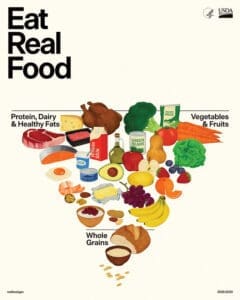
The 2025-2030 Dietary Guidelines feels different – not revolutionary, but noticeably recalibrated. Instead of emphasizing what Americans should restrict, the focus has shifted toward nutrient-dense whole foods, balanced dietary patterns, and reducing ultra-processed foods and added sugars. And notably, beef is no longer singled out as something to reduce by default.
For cattle producers, that shift matters.
What the Guidelines Say – Plainly
The new guidelines emphasize dietary patterns built around whole foods, including meat, poultry, eggs, dairy, fruits, vegetables and grains. Rather than placing strict limits on saturated fat across the board, they encourage moderation within the context of total diet.
Lean beef is acknowledged as a high-quality protein source, providing iron, zinc, B vitamins and essential amino acids. This aligns with long-standing nutrition research showing beef’s role in supporting growth, muscle maintenance, immune function and overall nutrient adequacy – especially for children, older adults and populations at risk for nutrient deficiencies.
The messaging still discourages highly processed foods and excessive added sugars, which is where the strongest evidence for negative health outcomes continues to point.
In short: Eat real food, limit highly processed products and build balanced meals. That’s a message most farm families already live by.
How This Fits the 2026 Consumer Landscape
This recalibration matches what consumers are already doing. According to recent consumer trend data, beef demand has remained resilient despite inflation and rising retail prices. While consumers are more price conscious, beef continues to be viewed as a staple protein – particularly as more meals are prepared at home.
Consumers are also showing increased interest in where their beef comes from, with a growing percentage purchasing directly from farms or local processors when possible. Motivations include quality, freshness and trust – not ideology.
This aligns with earlier observations that beef purchasing decisions are driven less by headlines and more by familiarity, taste and perceived value. In other words, while guidelines influence institutions, consumer behavior is shaped by experience.
Industry Response – and Why It’s Grounded
Livestock and meat organizations have responded positively, calling the Dietary Guidelines for Americans a return to a more practical, science-based approach. Their support isn’t rooted in a dismissal of health concerns, but in recognition that human nutrition has moved beyond isolating single nutrients as villains.
Most studies associating red meat with health risks fail to separate fresh beef from ultra-processed foods, or to evaluate beef consumption within balanced dietary patterns. The updated guidelines better reflects this nuance.
That doesn’t mean the debate over saturated fat is settled. Groups like the American Heart Association continue to express caution, citing cardiovascular risk. That perspective remains part of the conversation – but it is no longer the only voice shaping national guidance.
Why This Matters to Producers
For beef producers, the significance isn’t about celebration – it’s about positioning. The new guidelines help reinforce that beef has a legitimate place in healthy diets when consumed appropriately. That strengthens messaging across school meals, public institutions and consumer education.
It also supports what producers already know: beef delivers dense nutrition efficiently, supports rural economies and plays a role in food security – especially in communities where access to diverse protein sources may be limited.
The guidelines won’t end criticism of animal agriculture. But they do move the conversation toward balance instead of blame, which creates space for more productive dialogue with consumers.
Looking Ahead
The 2025-2030 Dietary Guidelines doesn’t hand the beef industry a free pass, but does acknowledge reality: people eat meals, not nutrients; food choices are contextual; and whole foods – including lean beef – can support health.
For producers, the takeaway is straightforward. Keep focusing on stewardship, efficiency, transparency and communication. Science continues to evolve, but credibility is built through consistency and, for once, national dietary guidance isn’t working against that effort.