By Patti Wilson Contributing Editor
Silage-cutting time is an intense, high-pressure juncture wrought with the possibilities of accidents and breakdowns. Add to that the task of managing a small army of people required to harvest your annual crop. Considering the total input of time and money involved in growing or purchasing the crop plus harvest cost, your silage deserves the best protection you can give it.
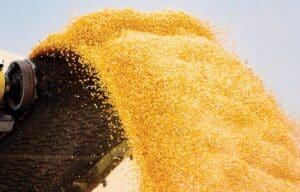
About 130 million tons of whole-plant corn is currently harvested for silage in the United States. A large portion of this crop is stored in walled bunker silos and unwalled piles, requiring protection from water and air. Surface spoilage can easily become an issue, with some piles losing 30 percent of their contents to spoilage. Packing and sealing practices are instrumental in retaining quality.
I visited with Ron and Connie Kuber of Clovis, Calif., at the Nebraska Cattlemen Convention in December. The couple owns Connor Agriscience and has developed a line of state-of-the-art silage barrier films under the names Sealpro® and Titanium®. It is a wholly owned and run family business founded in 1985.
A Little Background
Coming from a Minnesota dairy farm, Connie is familiar with the importance of quality feedstuffs in the performance of dairy cattle. She has a degree in ag journalism from the University of Minnesota, has promoted U.S. genetics for World-Wide Sires and has extensive experience in freelance writing, contributing to U.S. and European dairy publications. Connie is in charge of all education, advertising and marketing functions at Connor Agriscience.
Ron’s college degree came from Cal Poly-San Luis Obispo. His time is spent largely in the field, consulting with beef and dairy producers and focusing on harvest planning and feedout. He attends numerous trade shows and keeps in contact with beef and dairy industry professionals. Connor Agriscience joins with Extension services and universities such as Colorado State, Iowa State and the University of Nebraska. Several universities use Sealpro® products on their research farms.
Ron recommends that all dairies and feedlots maintain a good relationship with a competent nutritionist and welcomes their collaboration for the benefit of their customers.
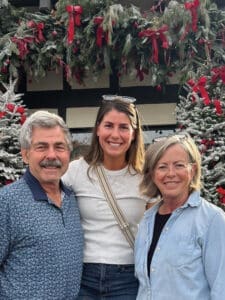
The couple’s daughter, Madeline, is deeply involved with the company as well. Connie explained that, after completing a degree in experience industry management at Cal Poly-San Luis Obispo, Madeline returned home to help “temporarily” in 2017 and never left; after seeing enough of urban life, it was time to return to agriculture. She is in charge of corporate finances, shipping logistics and travel.
Two additional grown children include Catharine, who works at The Fertilizer Institute in Omaha and son Chris, who is attending university in southern California to become a family therapist.
What is Sealpro?
The Kubers explained the process that is used in making their oxygen barriers. Sealpro products undergo extensive laboratory testing to ensure film performance. They are analyzed for the amount of oxygen transfer, tear and puncture resistance. Connie said that lab results on any oxygen barrier should be offered by all companies and should come from a third-party lab. The couple also emphasized the importance of skilled factory technicians to get a consistent outcome while mixing polymers and extruding these ultra-large sheets of barrier.
Sealpro films are made to their quality and size specifications; Connor Agriscience has spent time learning about the factors that go into a high-quality film. With agriculture backgrounds that didn’t include plastics engineering, the couple related their good fortune when some graduate students from the Michigan State University Plastics Engineering Program landed at Cal Poly-San Luis Obispo. Kuber’s close ties with the school paid off with plastics scientists who were available to help with Sealpro’s quality.
Connor Agriscience also produces Flortex®, a reuseable polymer felt-type product that gives additional protection when used on top of the Sealpro barrier. It may even be used to reduce the number of tires on top of your silage pile and is safer to walk on than plastic. A lighter version of Flortex is available for protection of dry hay bales. This product is also reuseable and sheds water when bales are stacked correctly. It is breathable, allowing internal moisture to evaporate through and not condense under the cover. When anchored correctly, the felt stays on the pile better than solid plastic.
Quality Feedstuffs and Service
Connie emphasized the significant financial advantage in protecting feeds. She cited the dairy industry as being able to see the daily results in feed improvements due to the hands-on nature of the business. Cattle are still cattle, regardless of beef or dairy, and beef will respond accordingly when improvements are implemented.
In an effort to better serve cattle feeders in the Plains states, the company has a warehouse in Lenexa, Kan. There are three such facilities in California – Lodi, Merced and Clovis. The many large dairies in the Golden State are a mainstay and original client base for the Kubers.
Connor Agriscience tries to provide timely customer service, even during busy times; however, they note that orders placed sooner rather than later are important to keeping costs and headaches down for everyone. They have not raised the price of their product for six years in an attempt to keep costs down for their clients. The cost of shipping, however, is out of their hands. It gives Ron some head scratching. “Shipping is a very real expense” he said. “It’s a significant challenge.”
Safety Education
The Kubers have a hand in hosting silage safety seminars. Ron, in particular, was privileged to work with Keith Bolsen, Ph.D., Kansas State University professor emeritus and silage expert. Bolsen’s message was “safe silage is efficient silage and vice versa.”
The Kubers helped to found the Silage Safety Foundation and assisted in administering it. After Bolsen passed away, the foundation was dissolved, but his work is remembered annually at a Kansas State University graduate student symposium and competition.
Connor Agriscience hosts in-person programs and webinars for any age group and features extensive safety videos on its website. Connie has developed videos and a coloring book for children and employees. They make a great employee safety meeting, 4-H Club or FFA project meeting. Ron said that his field visits with clients add to the safety of the farm as well as the quality of their feed. He says engineering a good silage pile takes a lot of planning and is a big part of the Kubers’ business. He enjoys consulting, saying he “works where they are.” It’s an important service.
Customer Driven
Connie shared the goal of their company is to be able to bring information to beef producers small and large. Silage is instrumental to the success of nearly every cattle operation, regardless of size, and the Kuber family is ready to help. Both Ron and Connie have had a hand in publishing scientific papers regarding sealing material, sealing time and its effect on fermentation, nutritional quality and organic matter loss in corn silage. Their work has been done in conjunction with Bolsen as well as the Dairy Science Department at California Polytechnic State University.