By Julie Barnett Contributing Editor

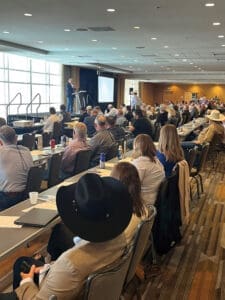
A full room welcomed the presenters for the California & Arizona Cattle Feeders Meeting that took place at the Hilton San Diego Bayfront Park, May 21-22, 2025. The weather was perfect, with morning fog giving away to California Coastal beach community sunshine in the afternoon.
Market Outlook
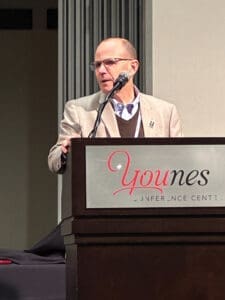
Presentations were kicked off by Holden Ramey with the Cattlefax Market Outlook and Update. Ramey emphasized the base equation of the expansion of the native beef herd to begin to fill the overall herd in coming years is still grass + cash = cattle kept to restock. With Southern California, Arizona, New Mexico and southwest Texas having 40 percent of the range in drought conditions, this could continue to limit western herd restock. However, to be noted is that even though the overall herd of cattle is down 8 million head between 2019 and 2025, beef production has remained fairly steady. If the La Niña weather pattern holds, rain outlook for the Southwest remains lower.
When considering the outlook for expansion of the native beef herd, only a slight increase in cattle inventory is anticipated in 2026-2028. Slowing the restock is not only rain, but interest rates may stay elevated for the next 2.5 to 3 years. Also, dairy heifer retention inventories are starting to grow, removing the availability from the feeder market, but the beef-on-dairy cross continues to grow as tools and resources for a better product make progress.
Cattle on feed in California and Arizona in 2024 were down 7 percent, while days on feed continues to rise with increased carcass weights.
Beef consumption factors are helping to support current continued positive price pressure. Per-person beef consumption is only down 1 pound. Chicken is up 10 pounds per person while pork is staying steady. Price to the consumer will be a driver of holding consumption going forward.
Another factor affecting our forward price outlook is harvest capacity. As new plants come online in the 2024 to 2028 window, harvest capacity is projected to stay ahead of inventory available, therefore creating a demand for animals.
The outlook indicates that the 2014 to present profitability in the positive for all levels of the beef supply chain, including strong margins for cow-calf operations for the next several years.
Beef on Dairy
Next, Blake A Foraker, Ph.D., Texas Tech University, provided insights into beef on dairy. Foraker pointed out that it is important to keep in mind that the. Beef on dairy (BOD) is not displacing the market, but is changing the type of dairy-influenced animal that is arriving for market.
BOD crosses have been ranking as 48.4 percent Angus, 9.36 Simmental and 6.15 percent Charolais, followed by other beef-sire breeds. What they’ve learned is that it is not the breed that matters, but the traits of the individual sire and how they interact with the dairy genetics that are affecting beef quality. The resulting crosses produce cuts with increased tenderness, often outperforming traditional beef, and an increase of the butteriness of the beef flavor, which appeals to many consumers.
The outlook is that the dairy industry will not be returning to the straight Holstein steer, especially when cattle feeders learn to obtain carcass yields optimization and not create an overly fat animal.
Managing Stress
Reinaldo Cooke, Ph.D., Texas A&M University, gave a presentation the benefits of managing stress to improve health and enhance productivity of feedlot cattle. The presentation was sponsored by FerAppease.
Research citing the benefits of FerAppease has shown it reduces the perception of stress in the animal by working with the central nervous system. It helps with management of stress during production practices from weaning, vaccination, pre-harvest transport and handling, shipping and receiving. When cattle have a reduced perception of stress, they maintain lower cortisol levels, stay on feed and recover more quickly as the stress impact is greatly reduced.
Politics
Ethan Lane, National Cattlemen’s Beef Association (NCBA) senior vice president of government affairs, kicked off the afternoon sessions with “D.C. in the Trump 2.0 Era.” There have been surprise constituents arise in this time that are vested in the Trump agenda – cattle producers, organized union workers and some surprise democrat switches are working together. NCBA has been consulted and offered perspectives on key matters.
From a regulatory perspective, the beef industry is on a two-year clock to try to achieve objectives. Historically, midterms cause a legislative change in one or both houses of Congress.
Showcasing Beef
Todd Fisher, owner, butcher and chef of The Meatery Butcher and Eatery, presented his recipe for creating a positive beef-eating experience. Chef Fisher has set out to stop bad, sad beef experiences. Through education, advice and preparation ideas, he connects with customers about food and the story of beef and beef production.
“Beef is more than a protein, its a story worth telling,” Fisher said. He shares these points with his clients to champion his beef product.
- Share sustainability and regenerative practices that matter to the consumer
- Innovate with lesser known cuts to bring value. Feature “chef cuts” presented with care and creativity.
- Premiumization and heritage beef dinner experiences – Offering premium beef gives the consumer a feeling of exclusivity and indulgence. Utilize breeding, feeding or aging information to enhance the offering.
- Global flavor – Local, popular cuts are given an international twist. A new generation of adventure eaters has emerged that value both cultural exploration and local integrity
- Showcase health-conscious choices. Emphasize that beef is the ultimate clean label. Nutrient dense and single-ingredient lean cuts can be showcased. Smart cooking methods and ingredient pairings help people be healthy without sacrificing flavor.
- Tech-driven transparency and traceability matter to many. A product with full backstory, chef confidence in sourcing and sharing that information with powerful narratives creates demand, builds consumer trust and sets the product apart.
”If I can trace where my wine comes from, I should be able to trace where my beef came from,” Fisher said. There is a market to fit this consumer if we have the opportunity.