By Larry Stalcup Contributing Editor
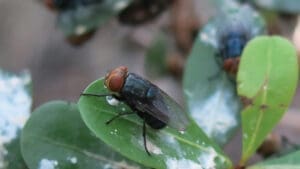
The threat of New World screwworm (NWS) flies buzzing into U.S. cattle herds from Mexico is intensifying. At CALF News press time, NWS flies were confirmed in cattle in Veracruz, Mexico – only 370 miles from the southern tip of Texas.
Just as USDA reallowed cattle to cross the border at Douglas, Ariz., on July 9, U.S. Ag Sec. Brooke Rollins again ordered the closure of livestock trade through the southern border. The off-and-on spiff from Mexico and the NWS crisis was apparent, as Reuters reported that Mexican President Claudia Sheinbaum charged on July 10 that the U.S. border closure was “exaggerated.”

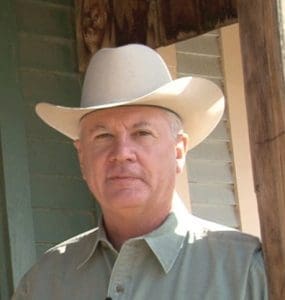
But not to longtime retired Texas A&M AgriLife Extension Livestock Specialist Joe Paschal. After the latest NWS case was confirmed, he growled: “Somebody better get their s— together,” with NWS-infected cattle only a few hours south of the Texas border.
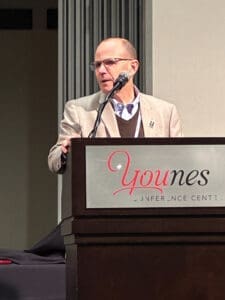
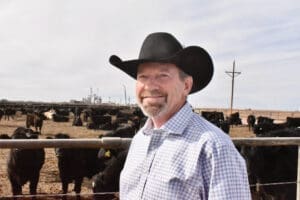
A month earlier, Paschal attended the annual Beef Improvement Federation (BIF) Symposium in Amarillo. BIF speaker Ben Weinheimer, CEO of Texas Cattle Feeders Association (TCFA), highlighted the serious NWS threat during his presentation on sustainability.
That was a few weeks after an NWS confirmation 700 miles south in Veracruz. It triggered the May 11 closure of U.S. ports to Mexican cattle, bison and horses. Along with Douglas, cattle trade was suspended in Santa Teresa, N.M., Columbus, N.M., Del Rio, Texas, and Laredo, Texas.
After signs that NWS was halted at the 700-mile location, Sec. Rollins called for staggered opening of the five ports from July 7 to Sept. 15. But after the early July confirmation of NWS flies several hundred miles closer, openings were cancelled two days after the Arizona crossing opened. USDA has taken steps to combat NWS with plans to establish a sterile fly dispersal facility in South Texas. USDA has also committed funds to renovate an existing fly facility in Metapa, Mexico, to add prevention power to a sterile fly plant in Panama.
Paschal told CALF News he was pleased with the additional sterile facilities. “Those are absolutely steps in the right direction. But the plants won’t be running for nine to 12 or more months,” he said. “That’s too long. All it takes is one tropical storm to push the flies another few hundred miles north. I don’t know if we have the wherewithal to get together and be able to get rid of NWS flies before they infest our herds.”
“My concern is we never really got rid of the cattle fever tick,” he added. “We’re using the same technology for the cattle fever tick that we did 100 years ago. We need additional new techniques and technologies to defeat NWS. The sterilized fly technique is effective – but we need more options.
“In the past, we used cardboard tubes to collect suspected NWS maggot samples from cattle and send them to USDA. Today, producers and veterinarians could drop a pin where the sample was collected, then send the samples for processing. We could have a quick turnaround time in identifying whether they are NWS.
“Those sample cases need to be available for producers to access them through veterinarians, county Extension offices, feed stores and USDA offices, with posters and flyers accessible to all landowners, not just livestock producers.”
Deer and wildlife can carry the NWS eggs and maggots. “Animal health and wildlife officials monitor for chronic wasting disease in deer,” Paschal explained. “They could also check for maggots on deer and other carcasses to determine if the animal died from NWS.
“There needs to be more education on what producers can do to identify and treat animals infected or killed by NWS flies, especially wildlife. What can or should be done with a deer or other wildlife obviously infested?”
Paschal contends the border shutdown may have been unnecessary to stop the spread of the NWS. “In my opinion, closing the border didn’t do anything to impede flies,” he stressed. “Those cattle are all dipped. They were free of external parasites. All that [closing] did was hurt Mexican producers who sold cattle to the U.S. and to feedyards that feed their cattle.”
Paschal is no stranger to taking on important animal health issues. He has been part of BIF since the late 1970s and served on the BIF Board of Directors in 1980. For his industry accomplishments, he was presented the BIF Pioneer Award at the symposium.

Symposium Pushed Herd Safety/Health, Production, Management and Sustainability
National Cattlemen’s Beef Association (NCBA) and state cattle groups commended Sec. Rollins’ actions to maintain a healthy U.S. herd. After the July 9 closures, TCFA Chairman Robby Kirkland said: “TCFA maintains that the rigid, scientific import protocols developed and implemented by USDA-APHIS for Mexican feeder cattle have and would continue to protect the U.S. cattle herd.”
Meanwhile, during the BIF Symposium, cattle geneticists, other researchers, animal health scientists and producers considered many other subjects that impact cattle production.
Topics included consumer education, a young producer symposium, beef chain profit drivers, beef-on-dairy-targeted genetics, methane management and other advancements in genomic and genetic prediction.
Consumer education includes a trend that started a decade or more ago – “Tell your story!” Tucker Brown from the RA Brown Ranch family headquartered in Throckmorton, Texas, told BIF attendees that the television series Yellowstone got many city dwellers more interested in ranch lifestyles. While the fictitious Taylor Sheridan saga exaggerated life on the ranch, the Western lifestyle mesmerized many viewers.
Brown has a podcast that reaches producers and consumers alike. “Much of my audience is in Dallas, Arizona and Florida,” he said. “They have general questions on what we do and why. They want to hear it from the [producer]. I use ‘edutainment,’ or mixing education and entertainment. I try to entertain people and slip a little education in there.”
While addressing the touchy subject of succession, Tiffany Lashmet, Texas AgriLife Extension law specialist, advised producers and landowners not to wait to develop a transition plan. And that starts with a “flight plan,” she said, which sounds friendlier than a “death plan.”
She listed items needed in a flight plan:
- Estate planning documents (wills, powers of attorney and advanced directives), retirement plan information (IRA/401K/pension), copies of life and health insurance policies, burial plot locations and funeral instructions.
- Various accounts, including email, computer and phone passwords; bank account information (where and how accounts are held and account numbers); safety deposit box information (location and who can access); payment information such as payees, due dates and payment amounts for debts and bills (i.e., mortgages, land payments and operating notes); lock codes or combinations (gates and gate locks, gun safes, in-home safes and barns or buildings).
- Identification documents, including copies of driver’s licenses, birth certificates, social security cards, marriage licenses and military discharge papers; documents related to real estate, including deeds, titles, registrations, leases, royalty documents, surveys and water permits; lists of assets (real property, personal property and business assets).
- Lists of owned land, livestock, stored crops and marketing contracts; crop insurance policies and USDA program contracts; list of key business relationships (attorneys, accountants, bankers, insurance agents and commodity buyers).
Lashmet raised some amusing, but serious situations: In most cases, “don’t have your former girlfriend” as a life insurance beneficiary, for obvious reasons, in the event of a husband’s death.
Look for additional BIF Symposium-related stories in future CALF News issues. For more on BIF and other 2025 BIF award winners, visit beefimprovement.org.