By Larry Stalcup Contributing Editor
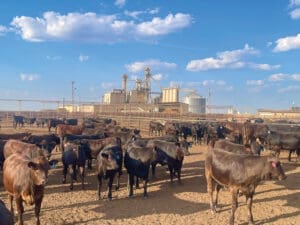
With steadfast consumer demand for high-quality beef, the four major packers and many regional processors “require BQA certification before they will accept animals from a feedyard,” said Mathew Davis, director of feedyard services for Texas Cattle Feeders Association (TCFA).
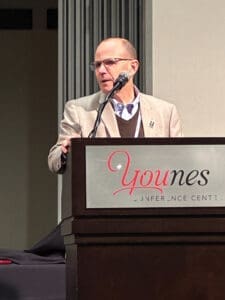
Davis was among the presenters at the first of three summer/fall Stockmanship & Stewardship training sessions promoted by National Cattlemen’s Beef Association (NCBA) and other cattle organizations. Hosted in August by West Texas A&M University (WT) in Canyon and Quien Sabe Feeders in Happy, Texas, the event emphasized Beef Quality Assurance (BQA) training for feedyard operators and employees. A second session, designed more for cow-calf and stocker operations, was held Springfield, Mo., in early September. A third session is scheduled for Oct. 14-16 in Moultrie, Ga.
NCBA, BQA, the Beef Checkoff and Neogen sponsored the regional sessions. TCFA started the first BQA program in the late 1980s. It was designed to help train feedyard operations to enhance their animal health and safety, and promote employee safety and stewardship. The BQA philosophy has since grown extensively through national, state and regional cattle organizations.
‘The Right Way Is the Only Way’

That statement greets visitors to the BQA website bqa.org. The philosophy illustrates the value of being BQA certified to help ensure that cattle raised in the U.S. receive best management practices for all parts of the animal’s life. That includes well-managed forages, grains and other feeds, nutritional supplements, vaccines, antibiotics, parasiticides, anti-inflammatories and other pain relief products.
Most feeders and producers know pharmaceuticals require storage or handling at proper temperatures. But hectic days happen – drugs might be handled carelessly when one thing or another spooks cattle, there’s an equipment breakdown or other issue that might delay treatment or damage the product. Davis stressed the need for feedyard personnel to strictly follow the label when handling and using pharmaceuticals and other animal products.
Obviously, don’t keep vaccines or other pharmaceuticals on the pickup dashboard and face efficacy issues on hot, sunny days. “Also, products that have been opened or partially used will deteriorate more rapidly than unopened products,” Davis noted.
Extra-label drug use may be needed to treat animals. In such cases, usage requires authorization, direction and supervision of a licensed veterinarian because drugs and withdrawal periods may be impacted in extra-label usage.
Proper needle size is essential in administering vaccines or other injectables. “Use the shortest needle necessary to achieve the intended route of administration,” Davis said, stressing that injections should be made in an animal’s neck to help prevent injection site lesions that reduce quality and overall profits.

Improve Feeding Outcomes
Jason Smith, Ph.D., Texas A&M AgriLife beef cattle specialist in Amarillo, cited ways to corral more ROI at closeout. “The contributors to cattle feeding economics are led by the value of the cattle at feedyard arrival, cost to feed and what someone else is willing to pay for them once finished,” he said.
Historically, finishing costs were typically about 55 to 60 percent in feeder value, 35 to 40 percent in feed costs and 5 to 6 percent in medicine, death loss, processing, interest and other costs. But with current low feed costs and higher feeder cattle costs, “cattle procurement represents 75 to 80 percent, feed and other direct costs are about 20 percent, and interest is about 4 percent of finishing costs for a native yearling steer,” Smith said.
With the higher feeder cattle costs, feedyards often seek higher quality cattle with proven genetics to help improve feedyard performance and quality. Through numerous marketing programs, stronger genetics can generate premiums from the packer.
Using USDA-AMS market data from June 2024 to June 2025, Smith said carcasses with a Prime USDA Quality Grade had about a $165-per-head higher average value over Choice carcasses. Certified Angus Beef carcasses averaged about $42 per head over Choice. Conversely, carcasses grading Select were discounted by about $174 per head, and Standard carcasses had a $300 per head discount.
Herd management programs should include cow and calf vaccination protocols. Castration and dehorning, mineral and vitamin nutrition, and internal and external parasite control are recommended. Weaning and preconditioning programs are also important to help prevent animal health issues.
Managing Stress
Smith pointed out that, despite the advances in vaccines and other treatments, preconditioning and weaning programs, health remains a challenge for many cattle due to the stressors they experience once they leave the ranch.
“Unfortunately, the general observation has been that we have not improved animal health outcomes over time, as death loss has not improved over the past 20 years,” he explained.
John Richeson, Ph.D., WT animal science professor and researcher at the WT Research Feedyard, added that such stress leads directly to bovine respiratory disease (BRD). He emphasized that roughly “80 percent of morbidity” in cattle shipped to feedyards is caused by BRD.
Cattle can face acute, or short-term stress, then encounter chronic stress when they face long hauls to different climates. Stress can increase when they’re comingled and see their feeding program altered. Richeson pointed out that higher risk cattle often don’t see their health improve if there is a delay in receiving a modified-live vaccine (MLV). “It is usually not a statistical advantage” to delay MLV treatments, he said.
Kendall Samuelson, Ph.D., WT associate professor and feedyard strategy researcher, said more research is needed on feedyard receiving rations and how they interact with stress and disease in incoming cattle.
The typical high-roughage receiving ration is designed to improve animal health but can limit cattle performance. “Improvements in health outcomes may not always offset the lower performance associated with reduced energy consumption,” she said.
“Further evaluation of the cost of processing roughages, ease of feed manufacturing, feeding times and number of deliveries is needed when designing a receiving program.” With longer feeding times seen in finishing cattle, Samuelson added that more studies are needed to determine how the timing of ration changes can be improved.
Smith said producers and feeders should expect to see continued cattle management research to improve performance and health outcomes at the ranch and feedyard. That research often leans on data gathered more than 30 years ago from the Texas A&M and New Mexico State University “Ranch to Rail” feeding trial programs. Many BQA and other recommended best management practices, such as preconditioning, resulted from Ranch to Rail studies.
“Best management practices like weaning and preconditioning, a strong preventative herd health program, and sound mineral and vitamin nutrition programs can add considerable value to cattle through making them more resilient to stress and decreasing the likelihood of death loss,” Smith said.
Secure Beef Supply
Secure Beef Supply (SBS) plans were discussed during the forum’s second day at Quien Sabe Feeders. SBS plans are designed to prevent and halt the spread of foreign animal diseases, such as foot and mouth disease (see CALF News, Oct.-Nov. 2024). Add to that list the latest animal disease threat – New World screwworm. For more on developing a Secure Beef Supply plan, visit securebeef.org or your state animal health departments.
Other Stockmanship & Stewardship subjects included cattle and feed handling, pen riding, and employee recruitment and management – all of which are areas that are vital to a good BQA certification.