By Will Verboven Contributing Editor
It’s a long way from the Great White North, but your writer and his patient wife, Cindy, found themselves in Edinburgh (pronounced Edinburaa), Scotland, while on vacation. Upon learning of our impending trip, our illustrious publisher, Betty Jo, suggested I review a local restaurant for this column. How perceptive; after all, Scotland is the home of the original Angus beef, although they refer to it as Aberdeen-Angus beef (AAB).
In Europe, I found it essential to determine the origin of the beef served in restaurants. For instance, for baffling reasons, Argentine Beef is considered the premium meat in much of the European Union and United Kingdom. North American beef is rarely found except on cruise ships.
We located an Edinburgh restaurant called Kyloe (pronounced Kaylee), which is Scottish lingo for small, long-horned, long-haired cattle from northwest Scotland, better known as Highland cattle. There was no Highland beef on the menu, but genuine Aberdeen Angus beef is a feature. The restaurant sources its beef exclusively from Hardiesmill Ethical Scotch Beef, a farm based in the Scottish Borders. It uses only pedigreed Aberdeen Angus cattle and supplies beef exclusively to 12 clients worldwide. Apparently, they are globally recognized as having the highest standards in welfare, from nose to plate, and proudly fly the flag for “Scottish Ethical Beef.” Quite a claim to fame. (I presume their Scottish cattle must be happy, patriotic and, hopefully, flavorful.) Waygu beef was also on the menu, but apparently not of Scottish origin.
The AAB on the menu is grass-fed; that’s no surprise, as North American-style feedlots don’t exist in the EU/UK. Another menu ambiguity over there is that they have different names for cuts of beef. For instance, sometimes a T-bone steak is called a florentine steak, a porterhouse can be called sirloin, and sirloin may be referred to as a rump steak. Filet mignon seems universal everywhere. The UK also has curious beef cuts like clod, silverside and feather blade. The Dutch take odd beef cut names to a new level. For example, they call tenderloin “ossenhaas,” which curiously translates into oxen hare. But I digress.
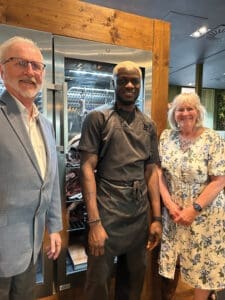
I suspect to reduce beef cut misunderstandings, a waiter brought a variety of raw steaks to our table from which we could pick our preference. The samples shown were a tad thinner than I expected and had less marbling, which is to be expected from grass-fed beef. To get a better cross-section of Scottish AAB flavour, I chose the “taste of Hardiesmill” as the main beef course, which included portions of their version of sirloin, flat iron and rump steaks. I prefer my steaks rare with only modest seasoning so the actual beef flavour is not diminished. For an appetizer, I chose the roasted bone marrow with mushroom duxelles. I have had this beef item before, but I couldn’t tell whether this was genuine Scottish AAB or not.
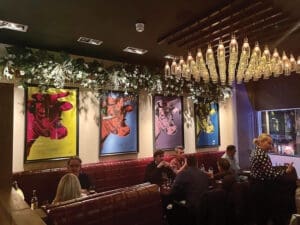
This restaurant plays up its focus on beef with cattle-related décor, photos and other imagery, so one’s anticipation for an extraordinary beef tasting experience is heightened. Upon arrival, I calmly dug into the steaks one at a time to ensure I could savour each steak’s texture, tenderness and flavour.
Before I declare judgment on these steaks, I will note that we North Americans are spoiled with the finest grain-fed, marbled, most tender and flavourful beef in the world. That’s an impossible standard to beat by beef from anywhere else in the world. That would be the case with the Scottish beef steaks at this Edinburgh establishment. The steaks were flavourful but somewhat thin and had a pronounced charcoal taste. Tenderness should have been better, considering the hyped reputation of the beef.
To be fair, Scottish AAB may be seen as the epitome of beef in the UK because consumers over there do not have access to North American steaks to compare. The lack of North American beef is due to bogus health restrictions on beef imports from Canada and the United States, but you already know that shameful story.
We need to appreciate that our North American beef is the most exceptional beef in the world, thanks to decades of careful genetic selection, sophisticated production management and the importance of grain-feeding in growing high-quality beef.
Finally, the folks at the Kyloe restaurant in Edinburgh were kind, and the service was excellent. If they are ever allowed, I can see them adding high-quality American steaks to their menu.